

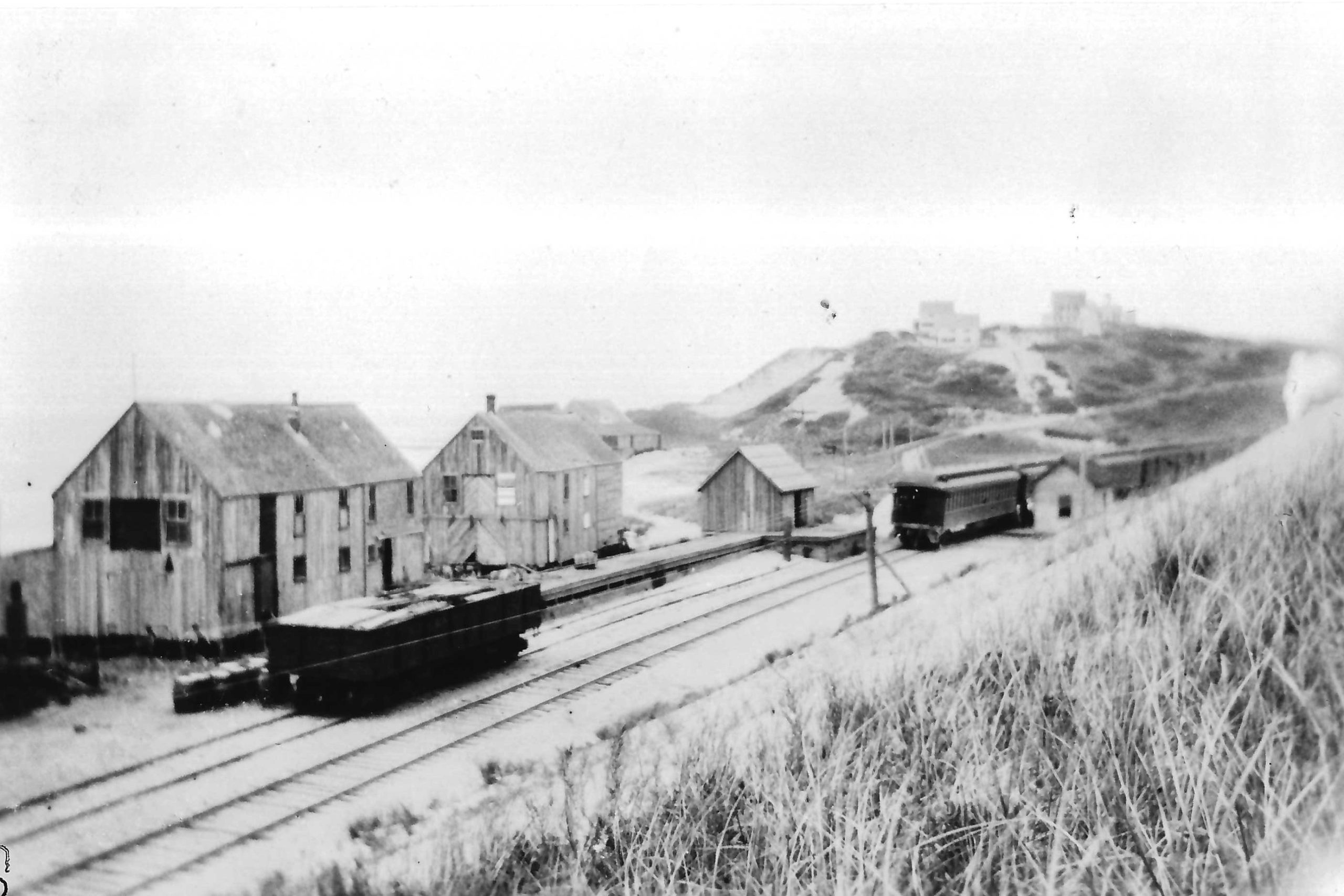
Truro was to be my mother’s escape, for in 1924 she recklessly and without my father’s knowledge, bought an old fish house at the foot of Corn Hill. She had carpenters and masons (who thought she was crazy) install a kitchen, a hand pump, a fireplace, a two-holer, three double bunks, a dining room table and benches, a few shelves for china—all for $1500. The total living space was at least 5000 square feet. It smelled of fish and tar. It was the ideal summer vacation spot, right onthe beach with all its clams and mussels, not too far from Mr. Horton’s dairy farm for fresh milk and vegetables, and the iceman and the meat man came twice a week in their horse-drawn carriages,later their model-T’s.
It was in Truro that I not only picked up something of the forces shaping American society, but also came to understand the struggle that faced an immigrant society, for the Cape in the 20’s fell into four distinct categories. The native American Yankees, such as the Nickersons, Lombards, and Paines, (the elite who no longer went fishing); the Portuguese, generally from the Cape Verde Islands, who now engaged in trap fishing in Massachusetts Bay; the Bravas, a mixture of Portuguese, Negro, and Indian; and the summer folk—at that time artists and writers and a few adventuresome explorers and seekers of peace and quiet from middle-class families. There was also a distinct cleavage between the Yankee families and the Portuguese. No intermarriage, no social intercourse, little representation at town meetings.
On the Cape, our new-found friends tended to be the offspring of artists and writers. Not only that, but I began shortly to pick up pocket money by posing for artists and helping them make frames and also by doing yard work. As a matter of fact, I also helped Jerry Farnsworth make bathtub gin. My brother became a home brew expert for the artist Leo Meilziner.
We quickly became conscious of all the rum running going on in Cape Cod waters. Every other night a truck would drive up to the small parking place in front of the fish house at the foot of Corn Hill and blink its lights, to which would then be answering blinks from heavy diesel-engined “fishing boats” three or four miles out. Often there might be an unloading right at Corn Hill beach itself. Once, chased by a Coast Guard cutter, the rum runner unloaded itself a half mile out and escaped. The next day half of Truro arrived with horse and wagon at low tide to pick up the whiskey bottles before the Coast Guard could get their trucks in motion.
My brother Geoff worked at Mr. Cabral’s hot dog, pop, and vegetable stand on the “Grand Highway of the Republic”—Route 6. Frequently his customers were in search of Mr. Cabral, who tended to bury his bootleg liquor in his vast asparagus bed. From the start, I favored the rum runners, perhaps as an unconscious rebellion, who on his few vacations to the Cape was outspoken in his disapproval…
(Excerpted from a memoir by William Ellery Merriss (1914-1991), who is buried in Truro’s Congregational Cemetery)
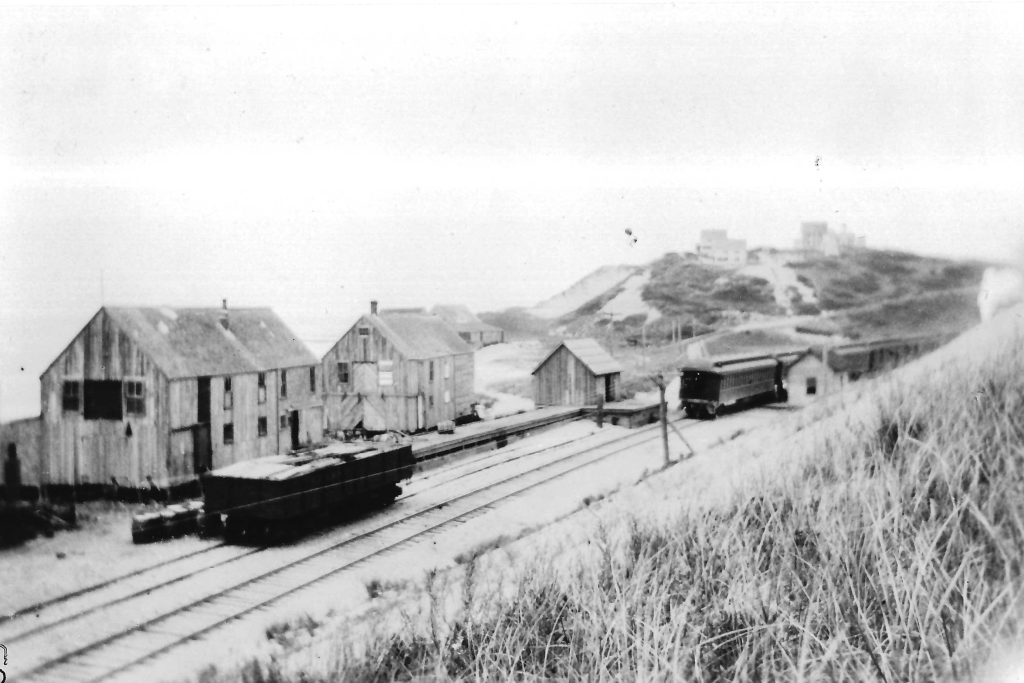
The fish shacks at Corn Hill. The smaller house on right was the old train station and is currently located to the left of the Corn Hill Beach parking area.